
The Ball Machine (Based on the Video by Derek Hugger)
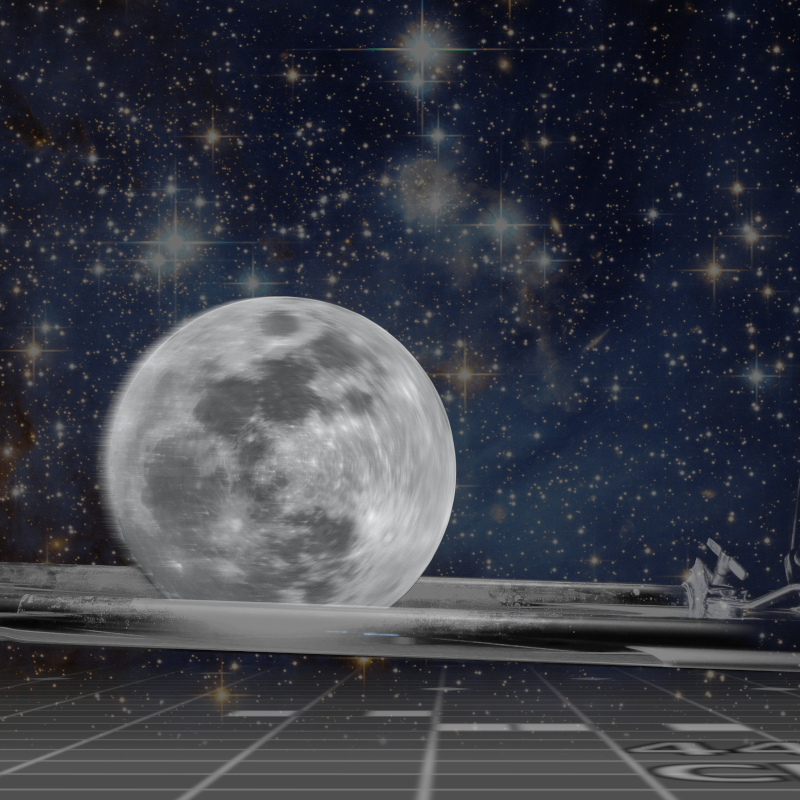
This is my favourite of these, which is why I’m putting it first. I made this song even before I made “Mr. Dudeley”, and it was my first time using Ardour.
I didn’t have this blog yet at the time, so I posted it on the family music website. Here’s what I wrote about it:
“This song is my own version of this video by Derek Hugger. This video is awesome. I love how the balls accelerate in such a natural, fluid way. In the video description, he says that he did all the animation by hand. I think that’s why, in the video, the same few animations are repeated over and over.
“I decided to make my own audio-only version, and I expanded on the original song, adding key changes and new instruments. [I think I got the idea because the song was so repetitive.]
“This was also my first project in Ardour. It’s great software and I really like it. Most of it, anyway. I like how in LMMS, when you double-click on a region, the piano-roll editor pops up. In Ardour, I had to zoom in every time I wanted to edit a track; this got kind of annoying because I was doing it on my laptop and I didn’t have a mouse. However, the effects plugins in Ardour are easier to understand because they have graphical interfaces; in LMMS, they just present themselves as a bunch of knobs, and you can’t see what you’re doing.
“All the instruments (except the drums) used Yoshimi, which I like. It’s pretty intuitive and comes with a lot of presets. I used modified presets for all of the instruments, actually, except for the Modulin sound at the end. For some reason, I just couldn’t get it to sound like Martin Molin’s modulin. I wasted a lot of time trying to get it to sound exactly right. In the end, I just gave up and made a sound that suited the mix. I also learned not to use the panic-button in the top-left corner of the Ardour screen, because it would reset the portamento on the Modulin sound. Not sure if this is a bug or not, but it was preety annoying.
“For the drums, I used the Black Pearl drumkit from AVL Drumkits LV2. I liked it; it has a really good sound, though I added a pitch-shifter to the snare-drum to put it in a different sonic space. Turns out, I ended up tuning it to the key the song was in. [My dad] also added a compressor to it to make it more ‘punchy’.
“I didn’t add any other compressors or limiters to the mix because I feel that a well-balanced mix can speak for itself, and doesn’t need any help from a compressor or limiter. I did add an equalizer to the master bus, though.”
I think this is one of my best songs right now. I especially like the ending. I wish I had known (as I do now) that you can alternate hit velocities for the hi-hat when it’s playing quickly, which would have made the ending easier to listen to. Oh well.
Cycles

There are only a few games in the Linux Mint repository which are actually worth playing, and one of them is GLTron. I found it when I was looking for light-cycles games to play, because I was going through some sort of TRON phase, I guess.
The background music in the game is called “Revenge of Cats”, and when I first heard it, I thought, “Wow, this music is so dumb”. (I don’t think that way now, I’ve come around to liking it. It fits the tone of the game perfectly). But that’s why I started writing this song: I wanted to make a better background song for this game. (That’s my pride talking. It didn’t end up being usefull for background music, because of the narrative structure.)
This was allso posted to the family music blog, and here’s what I wrote about it there:
“I made this song about the game GLtron, a light-cycles game that came in my distro repository. I like it better than Armegatron Advanced because it’s more user-friendly and the AI bikes don’t just go around in circles.
“This song was made with LMMS. I went for a chiptuney kind of feel. The bike sounds actually came from the game. (I have contacted the author of the game, who gave me his permission to use them.)
“I started with the first non-bike sound you hear in the song, the pizzicato chords with LP filter going up and down. I started to improvise parts on top of that, and the song basically wrote itself. The bike sounds came around the middle of the project, as I realized that a song about lightcycles definitely needed to have lightcycle sounds in it. [I was aiming to tell a kind of story: if you listen closely, there are exactly three crash sounds, leaving player 4 as the winner. Also, I think the song drags on a little too long at the end. I should have shortened the last verse. Oh, well.]
“The cover image was made in Blender using edited versions of the bike models and arena textures from the game. These bike models are the kind that were used in the original TRON movie, but I went for a hybrid style between that and TRON: Legacy, by adding glowing lines on the bikes and reflections and motion blur. I rendered it with Cycles render, naturally. After it rendered, I added the glow effects in GIMP. The whole process of making this picture taught me a lot about working with Blender, how to make glow effects in GIMP, and about computer graphics in general. I was surprised by how ridiculously easy it is to make TRON-themed stuff, and how awesome it looks. [It’s because TRON stuff is generally low-poly, which makes it easy to model, and you only need two textures: a glossy texture for the main bits, and an emissive texture for the lines.]
“Thank you to Andreas Umbach for letting me post this, and thanks to all the crew and cast of TRON and TRON: Legacy. Without you, the world would be a much less interesting place.”
Don’t Buy the Liverwurst [Sketch]
Wow, what a mess of a sketch, huh? I kinda like it, though.
I was messing around with our old Kimball organ one day, when I had the idea to make a version of this song. I spent the better part of an afternoon recording all the different parts, which I did using the camera on my phone (and you can tell, from the audio quality of the finished recording. It was the only microphone I had.) The organ was very, very old, and broken. The only voices which still worked were the reed ones, which could only do one note at a time, so I had to record the chords one layer at a time, Switched-On Bach style. I allso added drums, piano, and vocals. I was going for a big-band kind of sound, but I think we can agree that I didn’t quite make it there.
Once I recorded all the tracks, I imported them into Audacity, lined them up, and mixed them together. As you can probably tell from listening to it, this is definitely not my best work, which is why I didn’t post it to YouTube, but you can listen to it here, because you’re extra special for coming to my blog.
 Heinz Sander
Leave a comment